

The Heart of the System: How to Choose the Right Amplifier for Your Turntable and Speakers
There is a particular pleasure in lowering the stylus onto a record.
The room quietens. The platter turns. A familiar voice emerges with warmth and texture. Perhaps you are unwinding with a glass of red, or sharing an album with friends after dinner.
The same is true of a well-designed cinema system. Lights dim. The opening scene begins. Music, dialogue and atmosphere arrive with scale and precision.
Yet in both experiences, one component is often overlooked: the amplifier.
You may spend hours comparing turntables and speakers. You may search for the best turntables in Australia or compare finishes across the latest loudspeakers. But the amplifier is the invisible backbone. It supplies the current, controls the speakers and connects your sources into one seamless experience.
Choose well and your system feels effortless. Choose poorly and even excellent equipment can sound thin, harsh or strangely uninvolving.
Here is how to choose the right amplifier for your turntable, speakers and room.
1. Start with the speakers, not the wattage
Amplifier matching begins with the loudspeaker.
The key specifications are sensitivity and impedance.
Sensitivity tells you how efficiently a speaker converts amplifier power into volume. A high-sensitivity speaker produces more sound from fewer watts. Impedance, measured in ohms, describes how demanding the speaker’s electrical load can be.
In plain English, the amplifier is the engine and the speakers are the road. Some roads are smooth and easy. Others require more torque.
A few points matter:
-
More watts are not automatically better.
Clean, controlled power is more important than an impressive number on a brochure. -
Speaker sensitivity changes the equation.
High-sensitivity speakers can play loudly and dynamically with modest amplification. -
Impedance affects amplifier stability.
A speaker rated at 8 ohms may dip lower at certain frequencies. Your amplifier should be comfortable driving that load. -
Room size and listening distance matter.
A compact lounge room has different requirements from a large open-plan living area.
The best match gives you headroom. That means the amplifier can handle musical peaks without strain or clipping. You hear a kick drum arrive with authority, rather than a compressed approximation of one.
For a deeper explanation of speaker and amplifier matching, DALI’s guide to matching speakers with amplifiers is a useful technical reference.
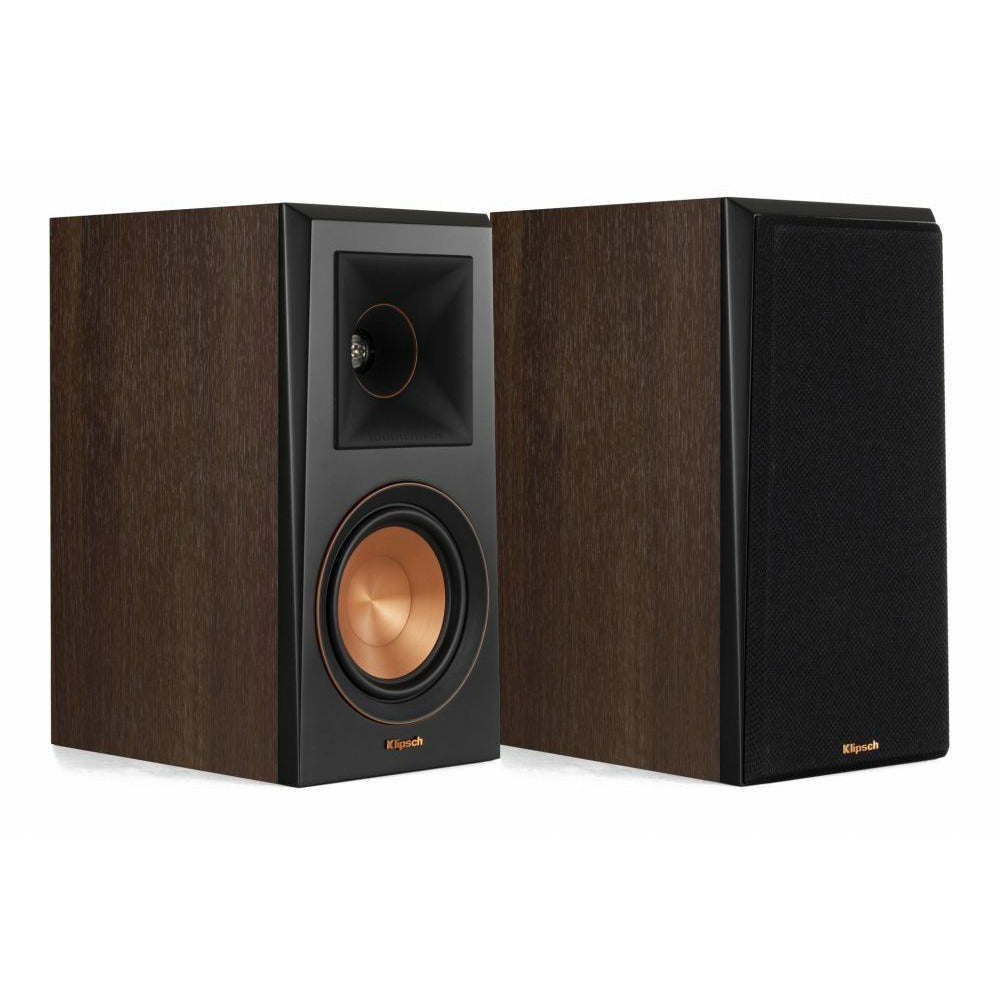
2. Why Klipsch speakers pair so well with thoughtful amplification
Klipsch loudspeakers are known for their horn-loaded technology and high sensitivity. The result is an immediate, dynamic presentation with strong impact and excellent efficiency.
Klipsch speakers Australia buyers often ask whether they need a huge amplifier. Usually, the answer is no.
A well-designed amplifier delivering clean power can make Klipsch speakers open up beautifully. Their efficiency means even a modestly rated amplifier can produce convincing scale in a typical living room.
That does not mean every amplifier will sound identical.
Klipsch speakers are revealing. They can show you the character of the amplifier, as well as any hiss or harshness further up the signal chain. The first watts matter. So does a quiet phono stage.
For a Klipsch RP-500M, for example, you might prioritise:
- Low noise.
- Smooth treble control.
- Stable operation into the speaker’s impedance.
- Enough current for musical peaks.
- An amplifier with a character that complements your listening habits.
If you are considering Klipsch Heritage models, a tube amplifier from Cary Audio can be a beautiful direction. Tube amplification can bring a generous, tactile quality to vocals, strings and acoustic recordings.
For Klipsch Reference Premiere models, a refined solid-state amplifier can offer excellent control, bass authority and modern connectivity.
There is no universal winner. There is only the right relationship between the amplifier, speaker, room and listener.
3. Match the amplifier to your turntable and cartridge
A turntable does not produce a standard line-level signal. Its tiny output needs to be amplified and equalised before it can be sent to the main amplifier.
That is the job of a phono stage.
A phono stage applies the RIAA equalisation curve used when records are mastered. It also provides the correct gain for your cartridge.
The two common cartridge types are:
- MM, or moving magnet: Usually higher output and straightforward to match.
- MC, or moving coil: Often lower output, with more demanding gain and loading requirements.
A built-in phono stage is convenient and can be remarkably good. The Marantz PM6007, priced at $1,100, is an excellent entry point for vinyl. Its superb built-in phono stage allows a compatible turntable to connect directly, while its integrated design keeps the system simple and elegant.
That makes it particularly appealing if you are building your first serious vinyl system or upgrading from a compact all-in-one unit.

As your turntable and cartridge develop, an external phono stage can give you greater flexibility. The Primare R35 supports both MM and MC cartridges, with adjustable gain and loading. This allows the phono stage to be carefully tailored to the cartridge rather than asking the cartridge to fit a fixed input.
Toma Audio has worked with Primare for 25 years. The brand’s Scandinavian refinement and disciplined engineering make its R-series phono stages a natural choice for a sophisticated analogue system.
The important principle is simple: your turntable deserves an amplifier and phono stage that preserve its character rather than bottleneck it.
4. Class AB, tube or streaming amplification?
Amplifier technology can sound intimidating. It need not be.
Class AB
Class AB amplifiers are a trusted choice for high-fidelity systems. They combine efficiency with linear, controlled performance and are used across many respected integrated and power amplifiers.
They are often a strong all-rounder for vinyl, CD and streaming.
Tube amplification
Tube amplifiers use valves to amplify the signal. They can offer a rich, organic presentation with an inviting analogue soul.
This can be especially appealing with high-sensitivity speakers and intimate listening. Think luminous vocals, woody double bass and a sense of ease at lower volumes.
Modern streaming amplification
A contemporary integrated amplifier may combine analogue inputs, digital conversion, network streaming, room correction and even HDMI ARC for television sound.
This is useful when your hi-fi system must also serve as the centre of everyday home entertainment.
The right choice depends on whether you want a dedicated two-channel system, a flexible living-room hub or a foundation for a larger home theatre installation on the Gold Coast.
5. The Onkyo Icon series: a modern system foundation
The Onkyo Icon range is an excellent example of the amplifier becoming the central intelligence of the system.
The Onkyo Icon A-50 streaming integrated amplifier, approximately $2,499, combines:
- Class AB amplification.
- 110 watts per channel into 8 ohms.
- Up to 180 watts per channel into 4 ohms.
- A 32-bit/768kHz AK4452 DAC.
- MM/MC phono input.
- Dirac Live room correction.
- Streaming and modern digital connectivity.
It is a convincing choice when you want one sophisticated component to connect vinyl, streaming, television and digital sources.
Dirac Live is best understood as acoustic calibration for the room. A microphone measures how your room affects the sound, particularly in the bass. The system then applies correction to improve balance and timing.
Your room remains part of the system. Dirac simply helps the electronics work with it more intelligently.

For a more ambitious system, the Onkyo Icon P-80 network preamplifier and M-80 power amplifier separate the control and power stages.
The P-80, approximately $4,299, includes Dirac Live, HDMI ARC and MM/MC phono connectivity. The M-80, also approximately $4,299, is a Class AB power amplifier with three-stage Inverted Darlington circuitry and substantial power reserves, rated at approximately 130–150 watts into 8 ohms and 200 watts into 4 ohms.
Separates can bring greater scale, authority and upgrade flexibility. The preamplifier acts like the system’s control centre. The power amplifier does the heavy lifting.
Together, they create a formidable foundation for demanding speakers and larger listening spaces.
6. CD is still part of the ritual
Vinyl is not the only physical format enjoying a renaissance.
Many listeners are rediscovering their CD collections. There is something satisfying about choosing a disc, placing it in the tray and hearing the first track begin without notifications, playlists or buffering.
The Marantz CD6007, priced at $1,000, is a classic companion to the PM6007. It supports CD, CD-R/RW and high-resolution files through its front USB input, with Marantz digital conversion and a dedicated headphone amplifier.
For a more compact and affordable option, the Onkyo Icon C-30 CD player, approximately $599, includes VLSC noise reduction, a high-precision ±10PPM clock, a 32-bit/768kHz AKM DAC and a headphone jack.
The amplifier remains central here. It determines how the CD player, turntable, streamer and television come together. Good system design lets you move from a record to a CD or a streamed album without the sound becoming disjointed.
7. Three sensible system directions
Entry-level vinyl system
- Marantz PM6007 integrated amplifier : $1,100.
- A quality turntable such as the NAD C 588 or a Music Hall model.
- Efficient bookshelf speakers, including Klipsch options.
- Add the Marantz CD6007 later if you want to enjoy physical media.
The NAD C 588, priced at $1,799, includes an Ortofon 2M Red cartridge and a carefully engineered carbon-fibre tonearm. It is a strong example of how precision at the source can reward a well-matched amplifier.
Flexible modern living-room system
- Onkyo Icon A-50 : approximately $2,499.
- NAD or Music Hall turntable.
- Klipsch Reference Premiere or another high-sensitivity speaker.
- Television connected through HDMI ARC.
- Dirac Live used to refine the room response.
This is an excellent direction for homeowners who want high-fidelity music during the evening and effortless television sound every day.
High-end dedicated system
- Onkyo Icon P-80 preamplifier.
- Onkyo Icon M-80 power amplifier.
- Primare R35 phono stage for detailed MM/MC matching.
- Cary Audio tube amplification as an alternative path.
- A carefully selected turntable from Music Hall, NAD or Primare.
- High-performance speakers chosen after listening.
For more specialised systems, Toma Audio also works with brands including Sparkler Audio, whose handmade Japanese components pursue quiet, natural and uncoloured musical reproduction.
8. Why auditioning matters
Specifications are useful. They are not the whole story.
Your room has its own proportions, surfaces and furnishings. Your records have their own character. Your preferred listening volume may be very different from someone else’s.
That is why auditioning is so valuable.
At the Toma Audio showroom in Tweed Heads, you can listen in a relaxed setting and compare the relationship between amplifier, turntable and speakers. Bring a record you know intimately. Listen for the things that matter to you: the texture of a voice, the weight of a piano, the timing of a bass line or the scale of a symphonic masterpiece.
We listen first. Then we recommend.
Whether you are researching the best turntables in Australia, planning a home theatre installation on the Gold Coast or choosing between Klipsch speakers, start with the invisible backbone.
A well-matched amplifier is not merely another box in the rack. It is the foundation that allows every other component to perform at its best.
Contact Toma Audio to arrange an audition and experience a considered system for yourself. No pressure. Just good music, thoughtful advice and the opportunity to hear what the right match can do.